

Beloved Family:
Rituals matter…words matter. For those who were not present for the 11 am Mass last Sunday, we celebrated the “Rite for Entrance into the Catechumenate and of Welcoming the Candidates.” I recognize that this is a lot of terminology in a short space. To clarify: this is the first formal opportunity for those men and women who are preparing for sacraments of initiation—through the Order of Christian Initiation of Adults— to be recognized as a body within the liturgy. The above full title accounts for the fact that some of these individuals have never been baptized, while others are baptized and intending to make a Catholic profession of faith.
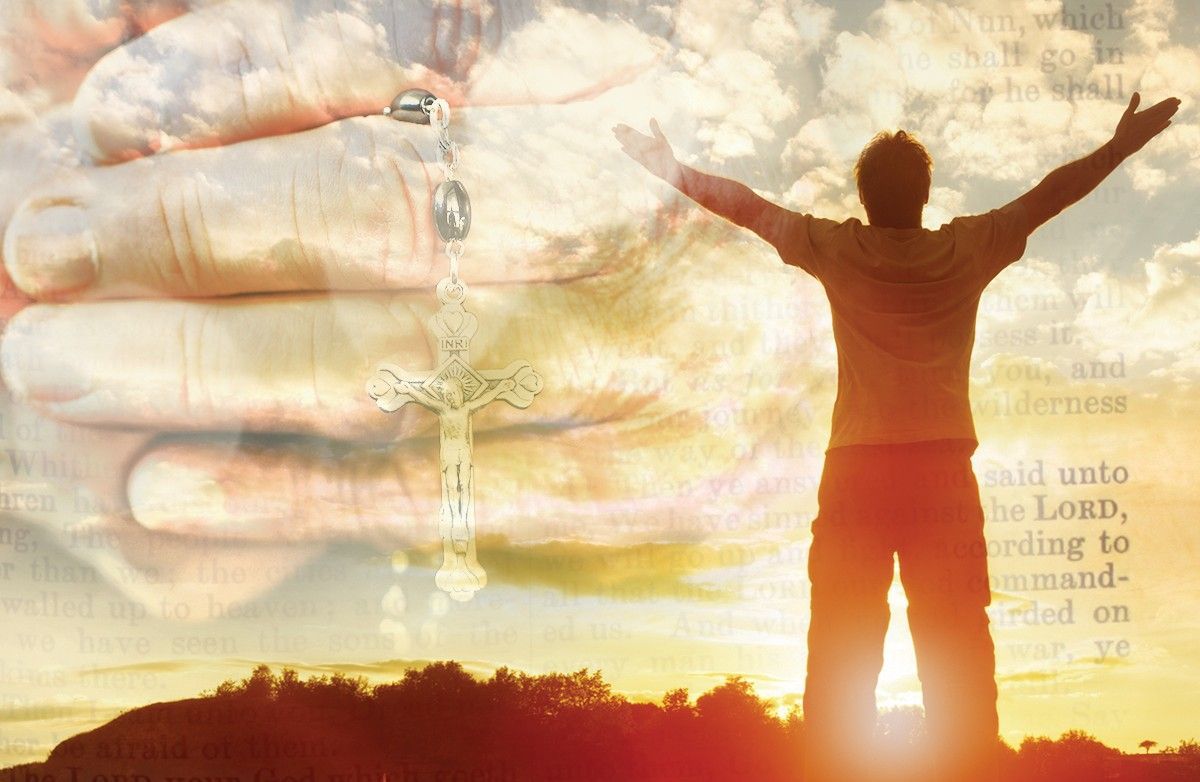
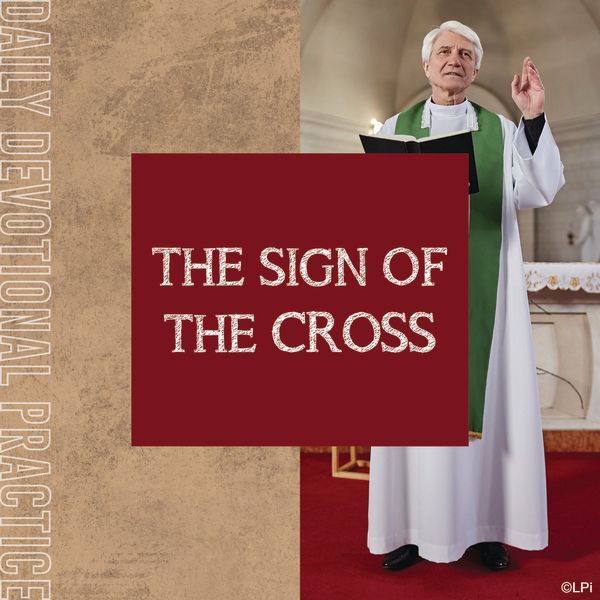
For both of these groupings, a part of the ritual calls for the signing of various senses, accompanied naturally by words that unpack the meaning behind the action. So, for example: “Receive the sign of the cross on your eyes, that you may see the glory of God…Receive the sign of the cross on your lips, that you may respond to the word of God.” It is a very powerful gesture to witness.
While all Catholics regularly have the occasion to make the sign of the Cross—upon entering and leaving church, as well as at the time of the proclamation of the Gospel— I wonder if the impact can become a bit dulled, at times, due to the frequency of the practice. As we consider what we do or do not do with parts of our bodies, it may be a good exercise more regularly and more intentionally to mark those parts with a cross, renewing our commitment to use those senses and abilities for virtue rather than vice.
For me personally, my mouth is often particularly “contended,” by Christ and by the Enemy. In that vein, I would like to share an excerpt from Pope Leo IV’s “State of the World” speech, delivered to the Diplomatic Corps, on January 9, 2026 in Rome. The whole speech is, I believe, very reader-worthy. Throughout, the Holy Father cites the work, City of God, by Saint Augustine. My source for the text is the National Catholic Register:
Today, the meaning of words is ever more fluid, and the concepts they represent are increasingly ambiguous. Language is no longer the preferred means by which human beings come to know and encounter one another. Moreover, in the contortions of semantic ambiguity, language is becoming more and more a weapon with which to deceive, or to strike and offend opponents. We need words once again to express distinct and clear realities unequivocally. Only in this way can authentic dialogue resume without misunderstandings. This should happen in our homes and public spaces, in politics, in the media and on social media. It should likewise occur in the context of international relations and multilateralism, so that the latter can regain the strength needed for undertaking its role of encounter and mediation. This is indeed necessary for preventing conflicts, and for ensuring that no one is tempted to prevail over others with the mindset of force, whether verbal, physical or military.
We should also note the paradox that this weakening of language is often invoked in the name the freedom of expression itself. However, on closer inspection, the opposite is true, for freedom of speech and expression is guaranteed precisely by the certainty of language and the fact that every term is anchored in the truth. It is painful to see how, especially in the West, the space for genuine freedom of expression is rapidly shrinking. At the same time, a new Orwellian-style language is developing which, in an attempt to be increasingly inclusive, ends up excluding those who do not conform to the ideologies that are fueling it.
How will I—and how will you—use our words this week, in a manner that demonstrates we belong to Christ and not to the world? Go help us choose wisely.
Let His Peace be with you,
Fr. Stephen